

- Home
- /
- Ceramic Industry
- /
- Raw Materials
- /
- Flint Pebbles
Flint Pebbles
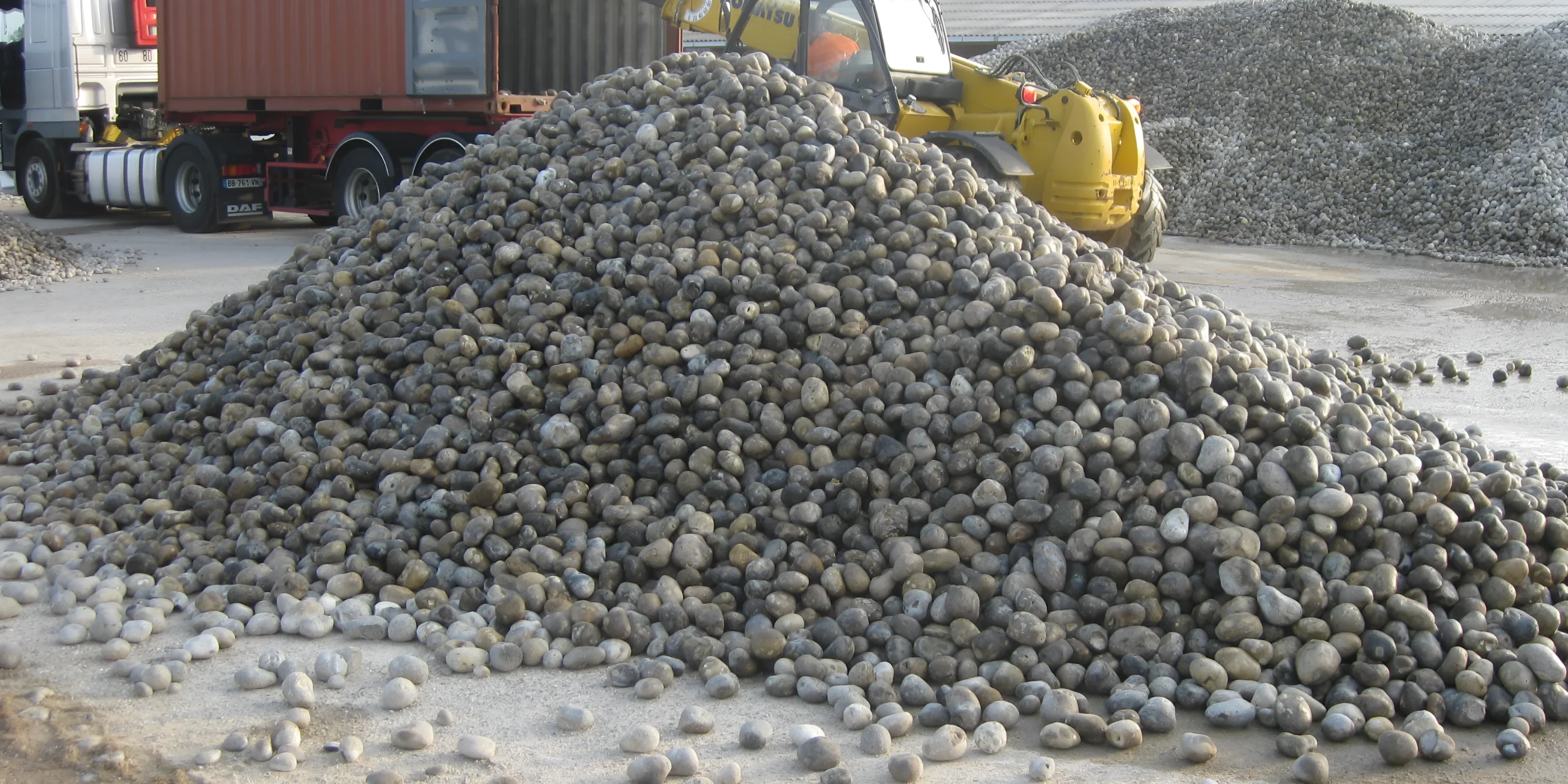
French Flint Pebbles for Ceramic Ball Mills
High Purity Silica Grinding Media for White Body Production
French Flint Pebbles are internationally recognized as one of the highest quality natural silica grinding media available for the ceramic industry. Their industrial performance derives from a unique combination of chemical purity and microstructural characteristics that clearly differentiate them from conventional quartzite-based silica pebbles available on the global market.
French Flint Pebbles are widely used in ceramic ball mills for the milling of white body compositions in the production of porcelain tiles, tableware and sanitaryware. They are also employed in silica sand grinding and selected industrial mineral milling processes where contamination control and chemical stability are essential.
Chemical Composition and Purity
The chemical composition of French Flint Pebbles is a critical parameter for high-end ceramic production. The material typically contains approximately 99% SiO₂ with an Fe₂O₃ content around 0.009%. Such extremely low iron oxide content is particularly important in white body ceramics, where even minimal contamination can negatively affect brightness, whiteness and chromatic stability.
The high silica concentration ensures chemical inertness during prolonged wet milling cycles. This stability helps maintain consistent slurry composition, reduces the risk of undesirable chemical interaction and supports uniform ceramic body characteristics throughout production
AVERAGE CHEMICAL ANALYSIS:
SiO2 (SILICA) 98,10%
Al2O3 (ALUMINA) 0,11%
Fe2O3 (IRON OXIDE) 0,09%
MgO (MAGNESIA) <0,08%
CaO (LIME) 0,17%
K2O (POTASSIUM OXIDE) 0,03%
Na2O (SODIUM OXIDE) <0,10%
TiO2 (TITANIUM OXIDE) 0,01%
P2O5 (PHOSPATES) <0,03%
MnO (MANGANESE) <0,03%
LOSS OF IGNITION (LOI) at 1150°C 1,25%
Microstructure: Calcedony (Cryptocrystalline Silica)
A key distinguishing feature of French Flint Pebbles is their calcedony structure, composed of cryptocrystalline amorphous silica. Unlike many alternative silica pebbles originating from Turkish, Spanish, Chinese, Brazilian or Egyptian deposits, which are generally quartzite-based, French Flint exhibits a homogeneous microcrystalline internal structure.
Quartzite materials are formed by aggregated quartz grains cemented together. This granular configuration introduces internal boundaries that can reduce resistance under continuous mechanical stress. French Flint, by contrast, presents a compact and vitrified internal structure without granular cementation. The resulting material offers superior structural integrity and significantly higher resistance to abrasion during ball mill operation.
Mechanical Performance in Ceramic Milling
During ceramic milling operations, grinding media are continuously exposed to impact forces, abrasion between pebbles, abrasion against ceramic body material and prolonged wet conditions. Under these demanding conditions, the calcedony structure of French Flint Pebbles provides stable and predictable mechanical performance.
The high resistance to wear reduces grinding media consumption per ton of milled material and limits the generation of fine contaminants. This contributes to improved milling efficiency, enhanced process stability and more consistent production parameters. In large-scale ceramic plants, the lower wear rate of French Flint Pebbles can translate into measurable operational cost reductions over time.
PHISICAL CHARACTERISTICS:
SPECIFIC WEIGHT 2,60
APPARENT DENSITY (bulk density) 1,60
POROSITY 0,30%
HARDNESS OF MOSS SCALE 8
Industrial Applications
French Flint Pebbles are particularly suitable for porcelain tile production, white body wall and floor tiles, sanitaryware bodies and tableware compositions. They are also used in silica sand milling and specific industrial mineral grinding processes where chemical purity and durability are critical requirements.
They are especially recommended for manufacturers operating under strict whiteness standards and demanding contamination control criteria, where the grinding media directly influence the final product quality.
Technical Considerations Compared with Quartzite Pebbles
When comparing calcedony-based French Flint Pebbles with conventional quartzite silica pebbles, the primary technical differences lie in structural homogeneity, abrasion resistance, wear rate stability and contamination control. Quartzite grinding media generally exhibit faster degradation due to their granular internal composition. French Flint Pebbles provide more consistent long-term performance in ceramic ball mills and greater predictability in consumption rates.
Supply Reliability and Quality Control
Consistent raw material selection, grading and quality control procedures ensure uniform chemical composition and physical integrity. For ceramic manufacturers operating high-capacity milling departments, reliable supply and performance stability are essential. French Flint Pebbles represent a technically validated and economically sustainable solution for ceramic grinding applications where purity, durability and process reliability are decisive factors.
Wet and Dry Griding
High Density and Wear Resistance
Versatile Industrial Use
Flint Pebbles
French Flint Pebbles are recognized around the world, as being far the best quality existing for silica pebbles.
They are sold to more than 40 countries near around 350 customers with around 80% in ceramic industries for the milling of white body (Tiles – Tableware – Sanitaryware) and 20% for silica sand and industrial minerals milling.
The big advantages of French flint pebbles are:
– Chemical: They are extremely pure with SIO2 content close to 99% and FE2O3 content of 0,016% only.
– Physical: French Flint Pebbles are the sole workable in the world to be Calcedony (amorphous silica) giving them a high resistance to abrasion. Inside structure of French flint pebbles is looking like vitrified.
Other silica pebbles found out around the world (Turkish – Spanish – Chinese – Brasilian, Egyptian etc …) are Quartzite. Quartzite is composed of little silica specks cemented all together. Quartzite is consequently less resistant to abrasion compared with Calcedony.
High Density
Wear Resistance